

Waiting for Alfonso, our driver, to take us to Herculaneum where we will meet our guide, Luisa.
Rather than heading to Pompeii with the rest of the Viking tourists we opted for a private tour of Herculaneum. Herculaneum is a smaller site and more easily accessible for Joanne.
The eruption of Mt. Vesuvius in 79 AD destroyed both Pompeii and Herculaneum. While the devastation caused by the eruption was virtually without warning for the residents of Pompeii many of the residents of Herculaneum managed to flee the city as the ash started falling. It fell over several days after being blasted into the stratosphere by the force of the eruption allowing the residents of Herculaneum to move to safety. Ultimately some 50 to 60 feet of ash and hot gas buried the city.

Old and New – The excavated portion of Herculaneum lies below the dotted line. The more modern city of Ercolano is above. Mount Vesuvius is on the horizon above all.
Archeologists estimate that less than a fourth of Herculaneum has been excavated. The remainder lies under Ercolano, the city built over the top of Herculaneum. Excavation of the remaining sections of Herculaneum would destroy the neighborhoods above.
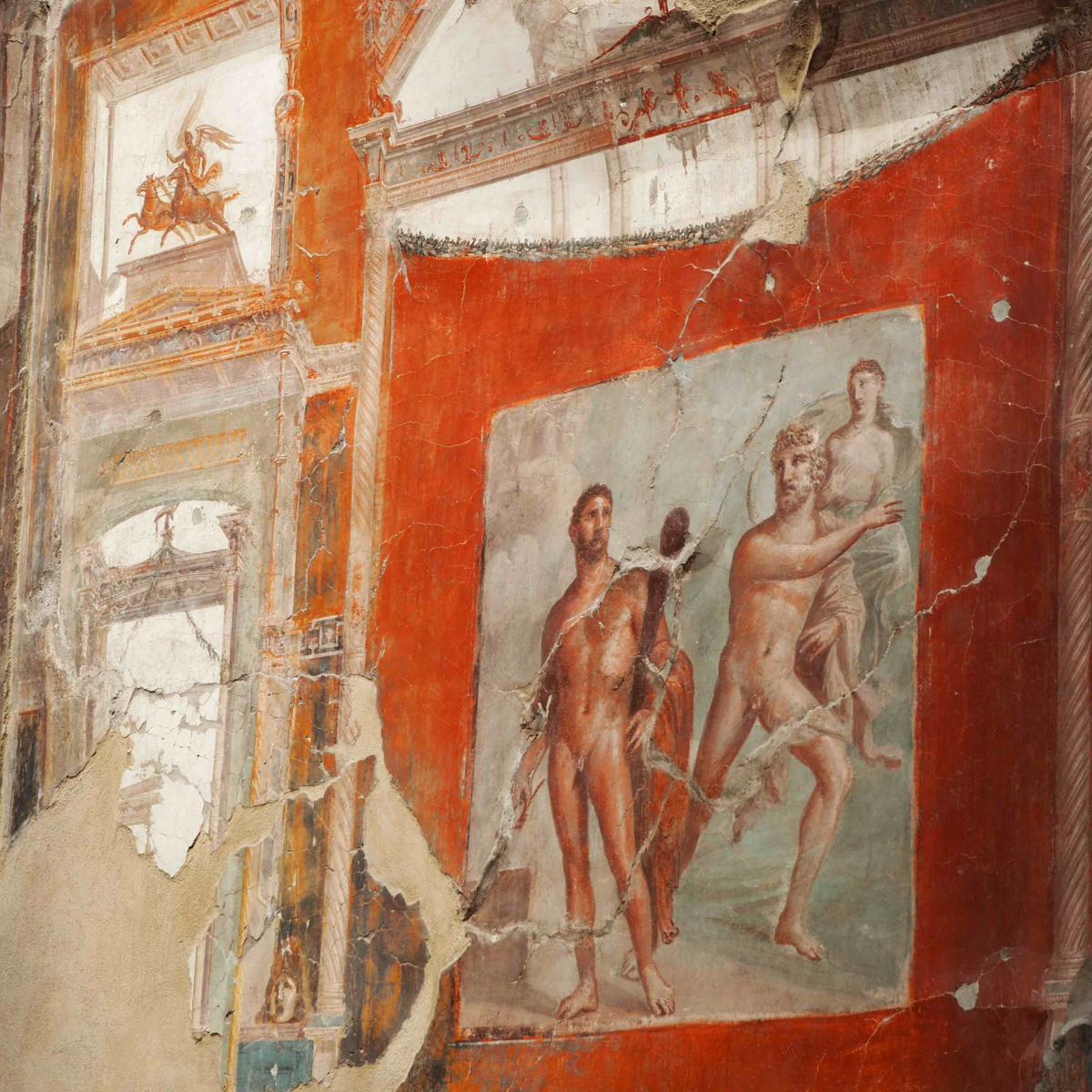
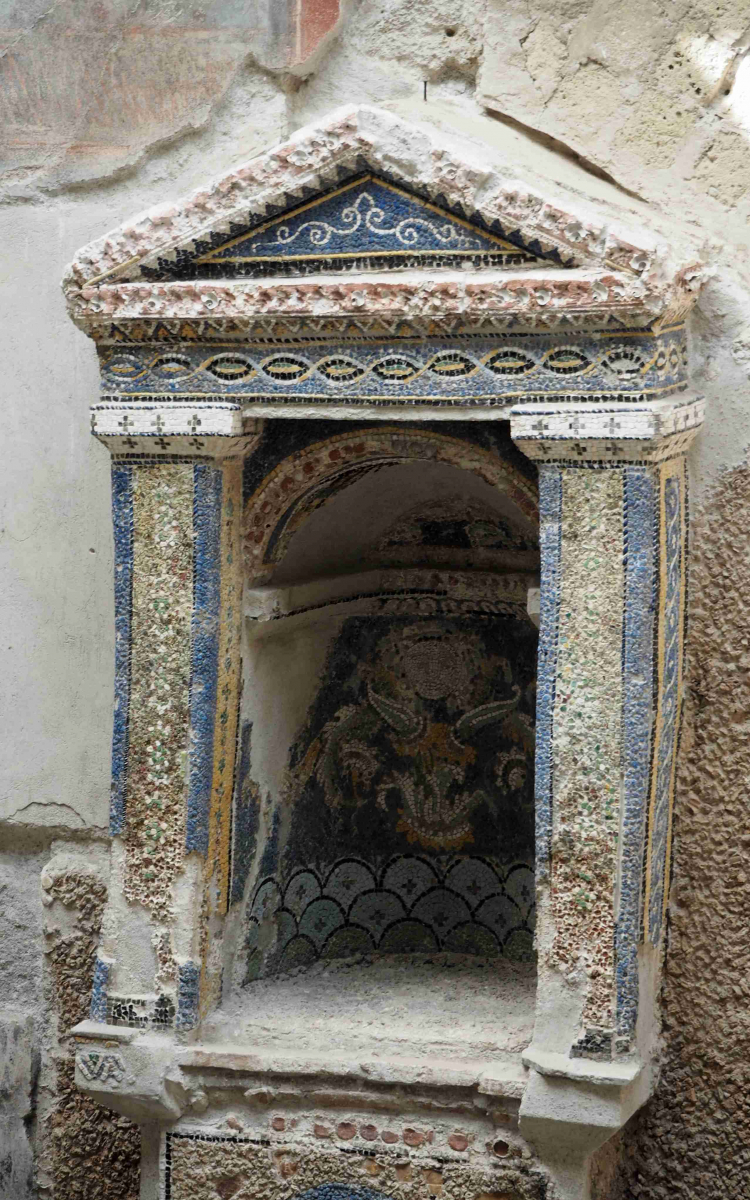
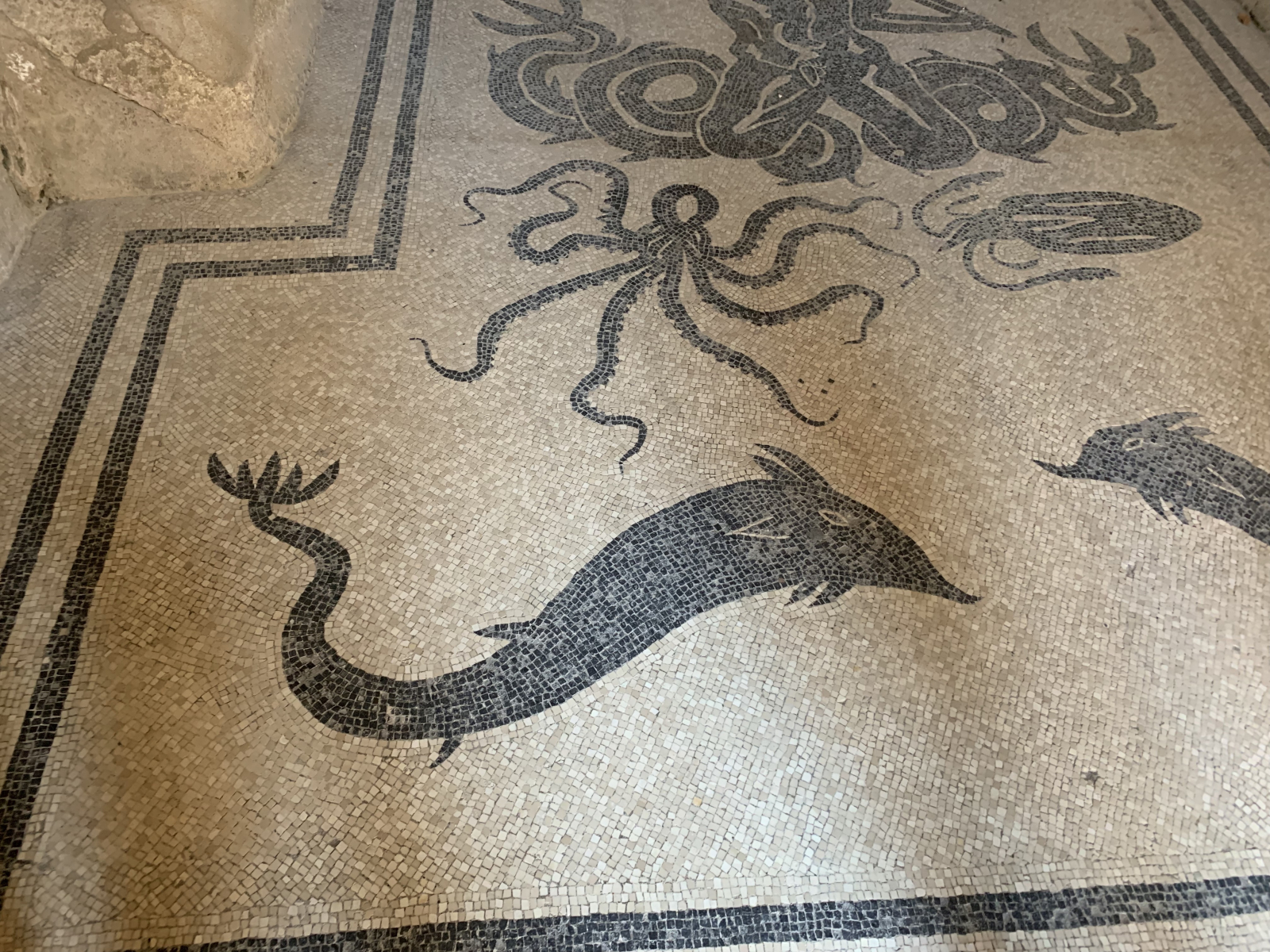
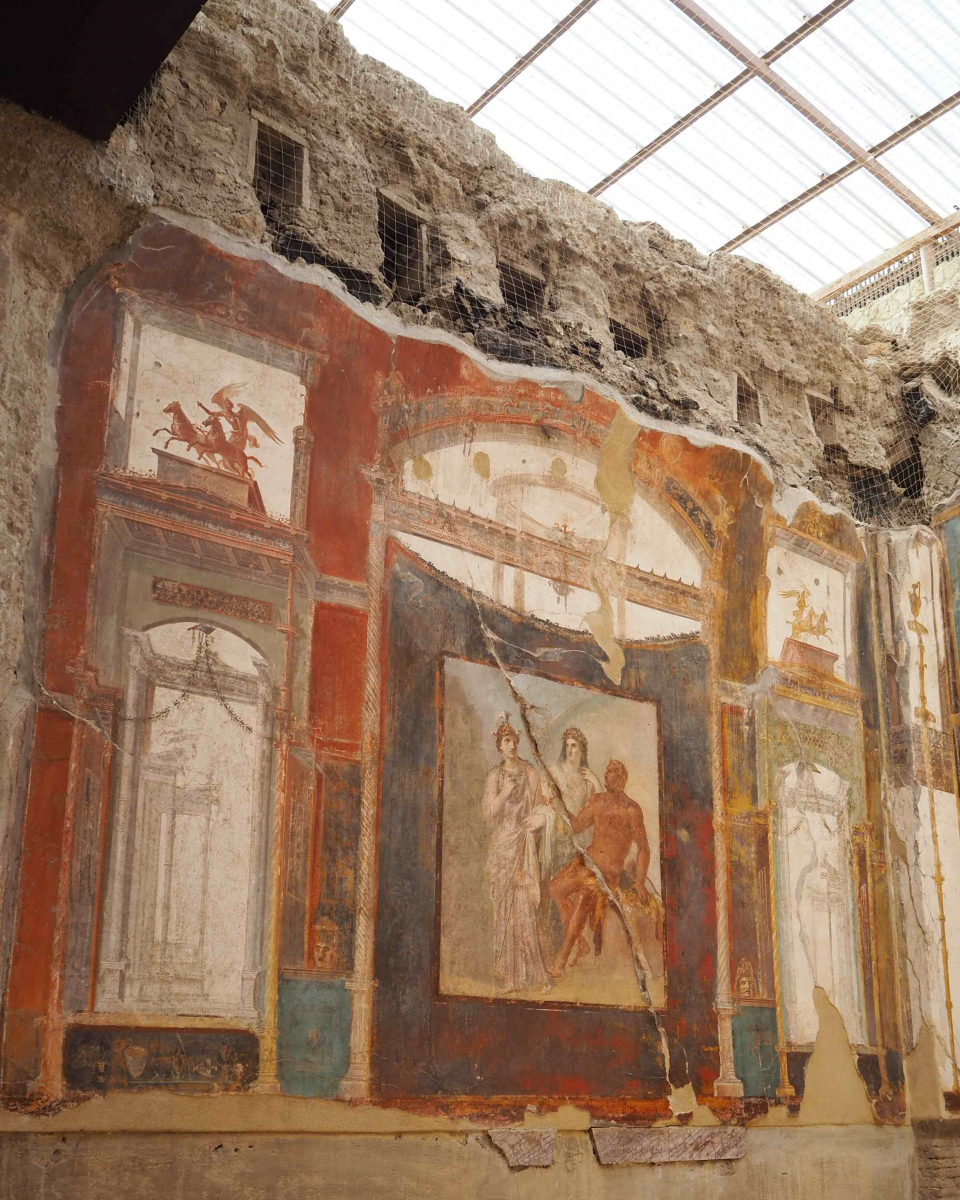
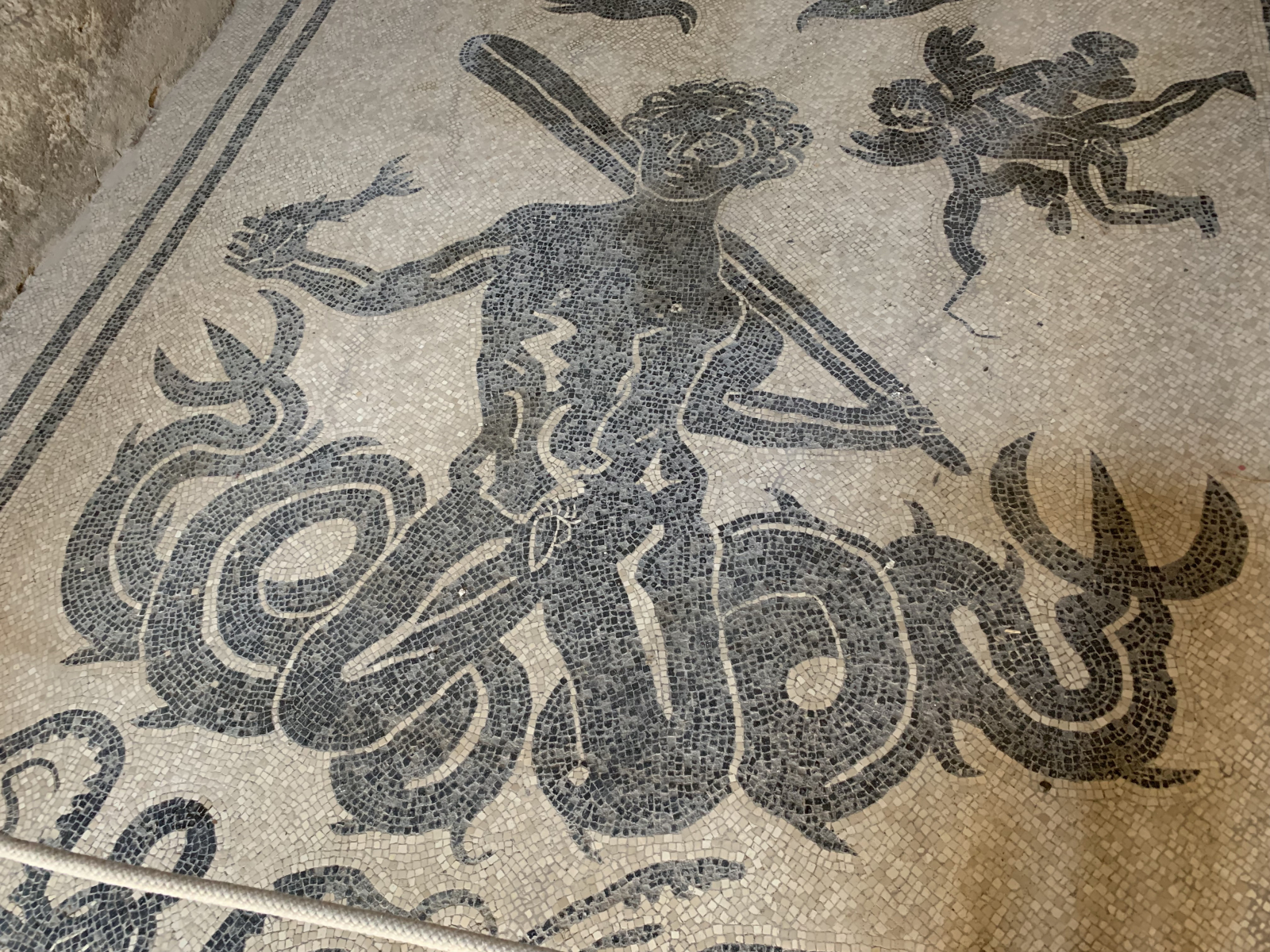
Because the pyroclastic ash and hot gasses fell over several days the destruction of Herculaneum was more gradual than the destruction of Pompeii where molten rock bombarded the city. So while portions of Pompeii burned many of the treasures of Herculaneum were buried in ash and thus preserved. Excavation revealed many frescoes and mosaics in excellent condition.

Keith, Joanne and Luisa

Fast food buffet from 79 AD

At the time of the eruption, the marshy area would have been at sea level.

Betty, Luisa and Joanne at Herculaneum