Barcelona is a clear winner as far as I am concerned. The city deserves a trip by itself. We saw only a small part of it, but what I saw, I liked. And what I only saw from a moving car, I also liked.
Betty had arranged for a private guide in Barcelona for our group of six. We were met port side by Montserrat, our guide for the day. She told us that she had been named for the mountain range that frames Barcelona on the north.
She started our tour with a quick trip to the top of Montjuïc, literally the hill of the Jews. Montjuïc rises above the harbor and affords a panoramic overview of Barcelona. Our guide pointed to our ship anchored in the harbor and then shifted our attention to the relative locations of the main attractions of Barcelona.

Barcelona skyline viewed from Montjuïc
Catedral de la Santa Creu (Cathedral of the Holy Cross)
The Cathedral is one of the two attractions in Barcelona that we were able to fit into this quick trip. It is the seat of the Archbishop of Barcelona. In addition to its unique, filigree spire the Cathedral sports an unusual menagerie of gargoyles – unicorns and elephants.

Barcelona Cathedral’s Neo-gothic Spires

Catedral de la Santa Creu – Barcelona

Catedral de la Santa Creu – Barcelona
Not to be outdone by the gargoyles of the Cathedral other buildings in the nearby alleyways of this medieval section of Barcelona stepped up their game, as well.

The gargoyles of medieval Barcelona
Look closely at not only the gargoyles, but the smaller heads upon which the gargoyles rest. The detail is amazing.
La Sagrada Familia (The Church of the Holy Family)
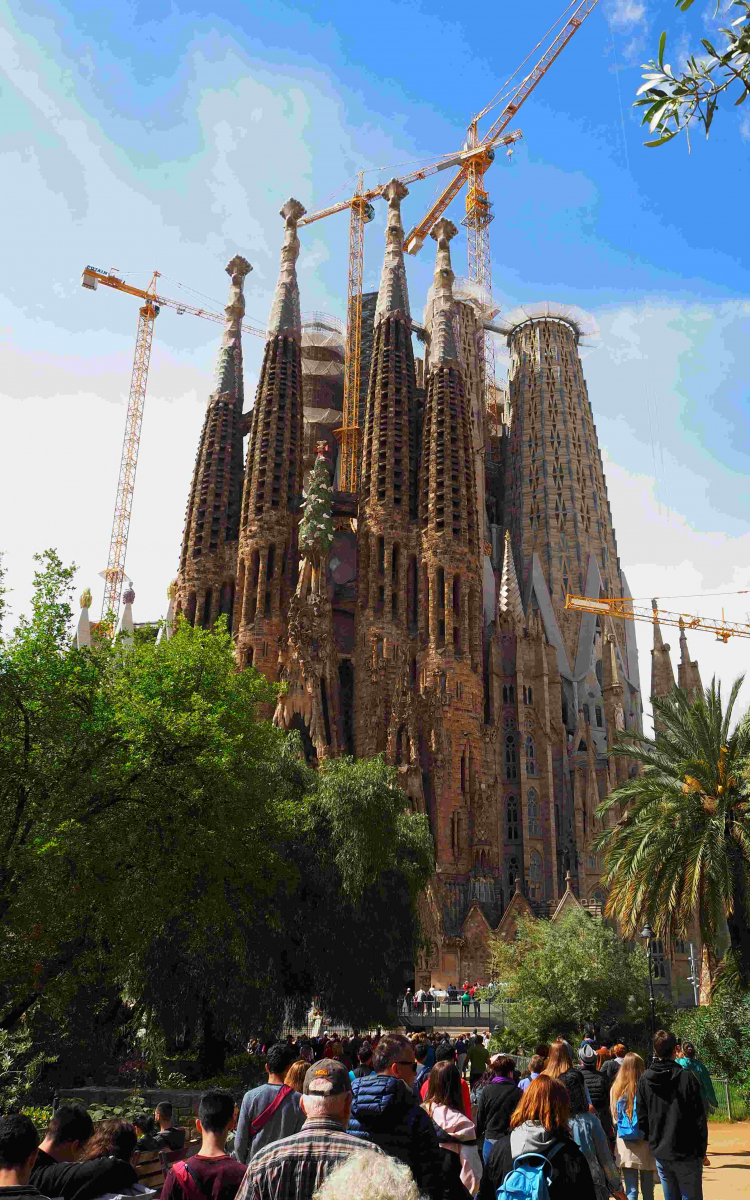
The cornerstone of La Sagrada Familia was laid in 1882. 137 years later it is only 70% complete. But there are ambitious plans to complete the church by 2026
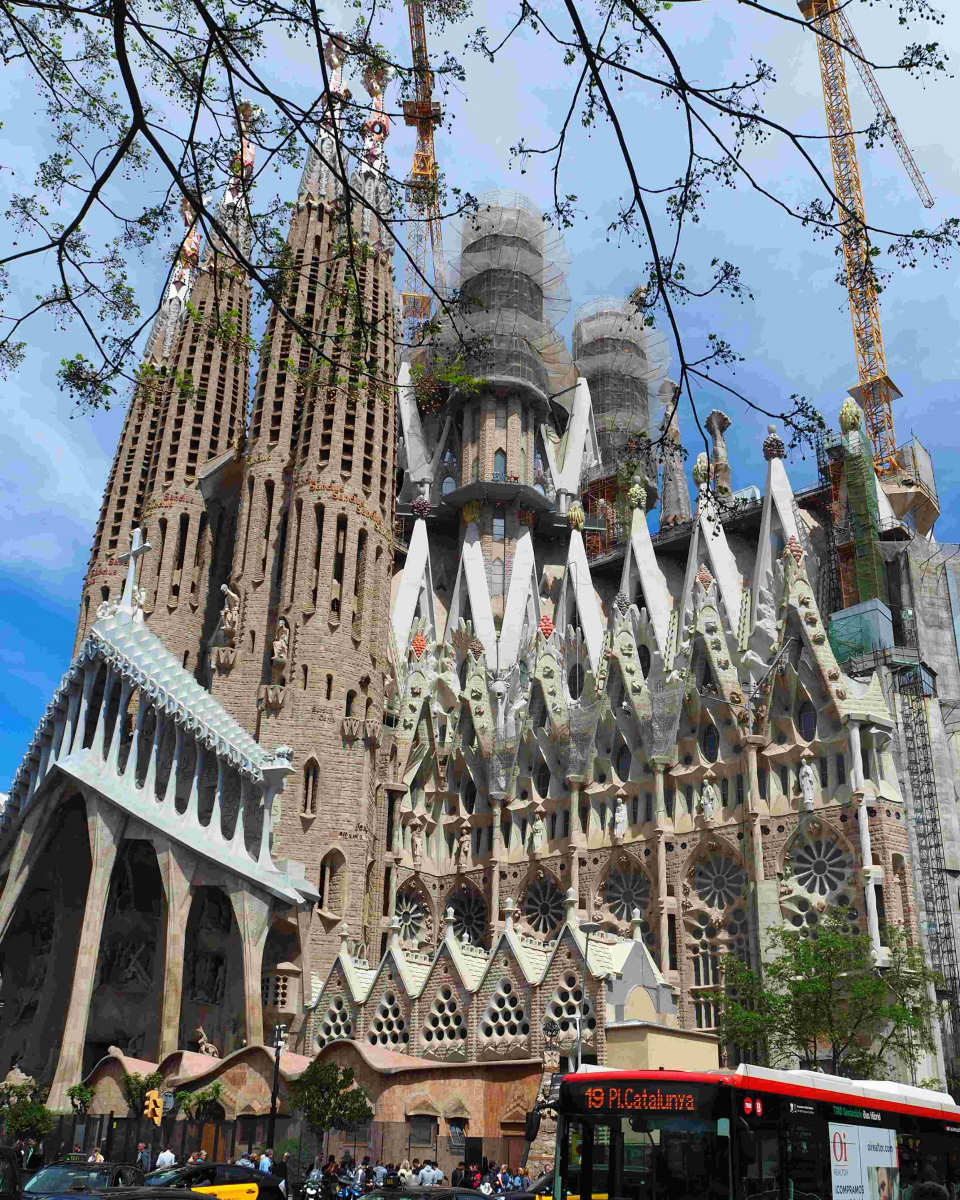
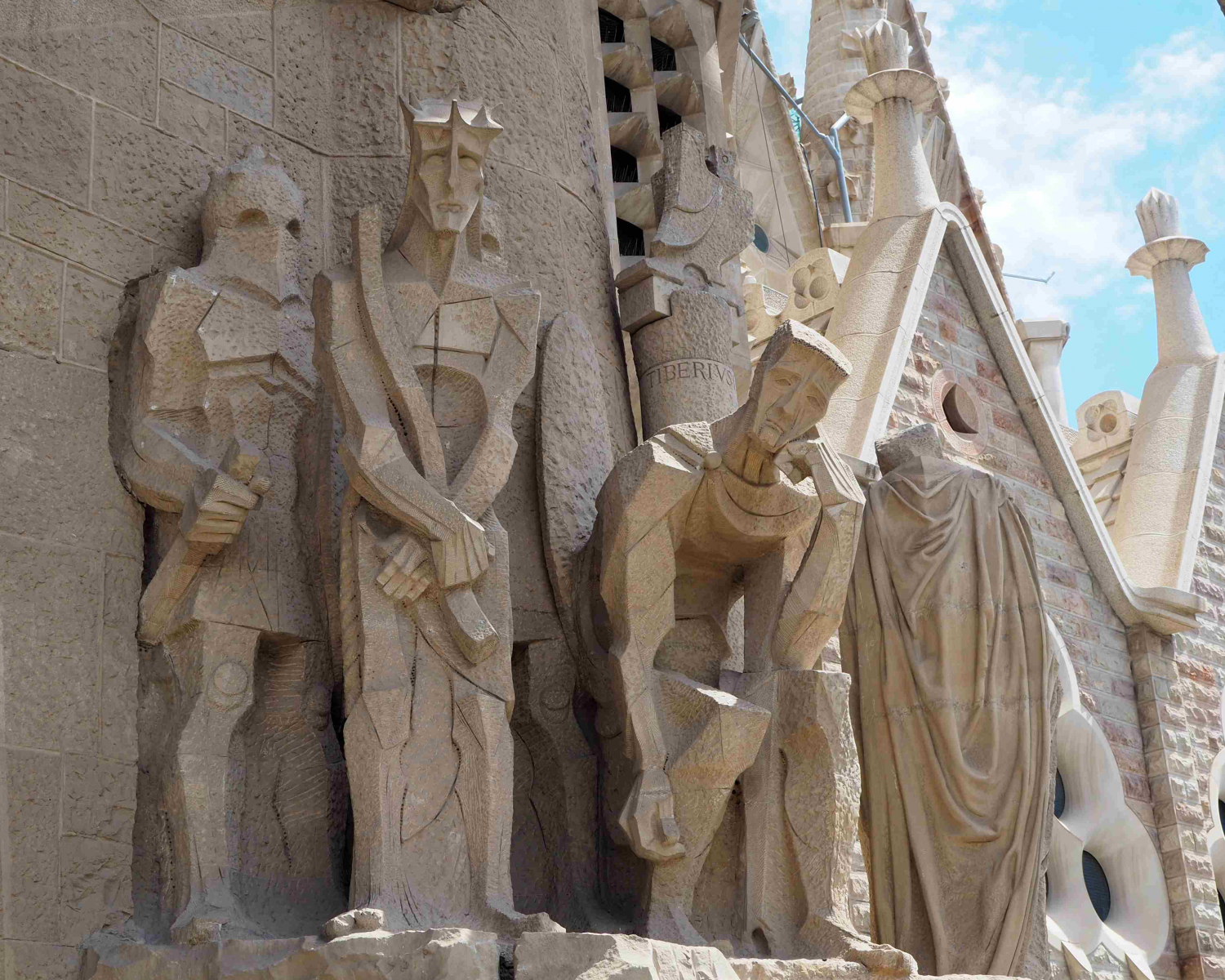
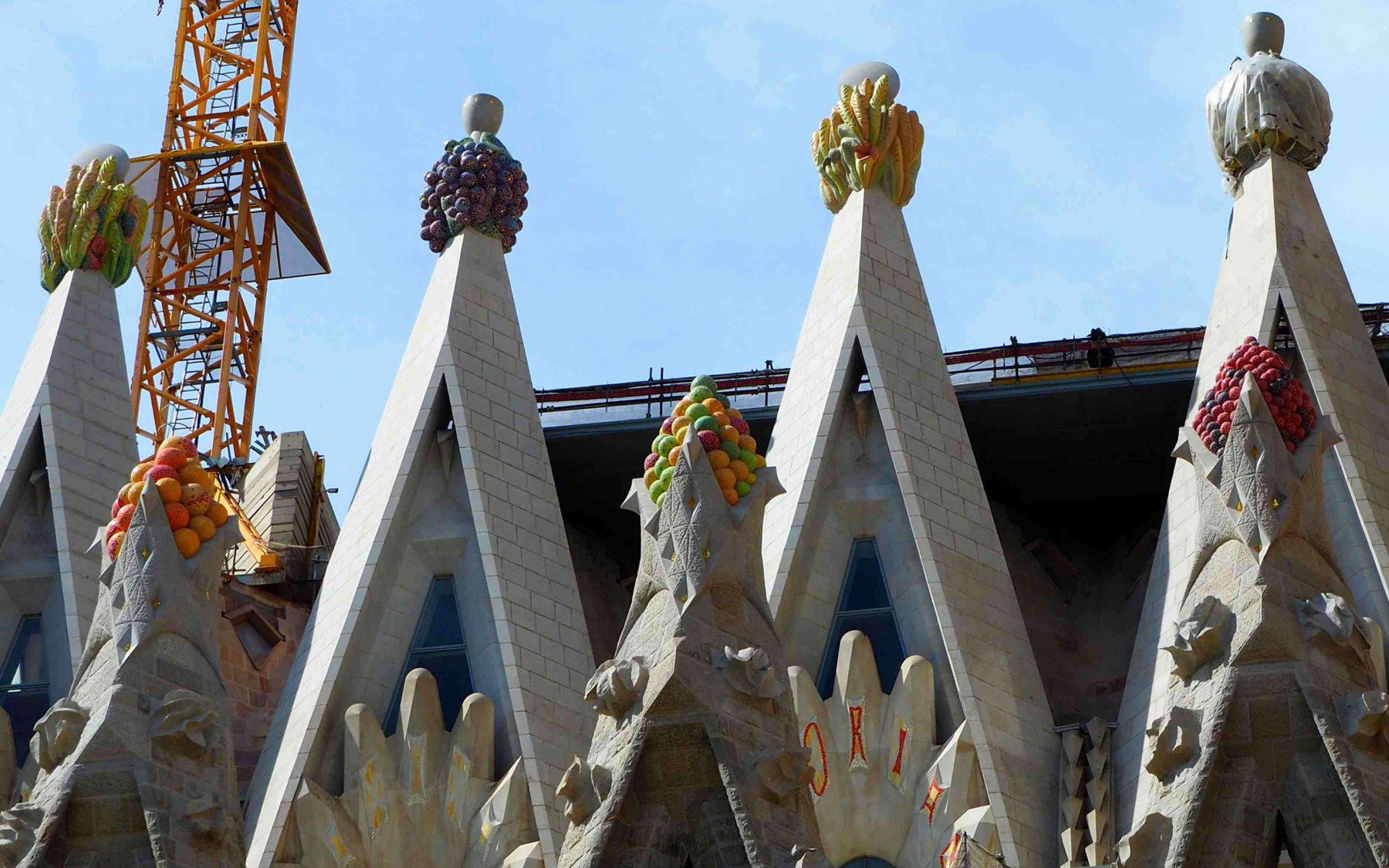
The design of the church owes its eclectic style to Antoni Gaudi (1852-1926). The man apparently never saw a straight line that he liked. Keith wondered how he recorded his designs or conveyed his plans to the craftsmen who were charged with building it. Traditional architecture and drafting involves straight lines. Gaudi’s architecture is described as organic taking its cues from natural world. His original design calls for a total of 18 spires, representing the 12 apostles, the Virgin Mary, the 4 evangelists and, the tallest of all, Jesus Christ. There will be three façades. On the east the Nativity façade representing the arrival of Christ and new beginnings. On the west is the Passion façade representing the passion of Christ from Judas’ betrayal with a kiss to the crucifixion. The third façade, which is still under construction, will represent the glory of God.
Gaudi was heavily into nature. The bronze entry doors at the Nativity façade are covered in leaves. Moving about among the leaves are frogs, lizards, birds and various insects. Betty managed to find a honey bee for me. It was near the bottom of one of the door symbolizing the primacy of pollinating insects in building the natural world. (From the gospel according to John, the Beekeeper.)

Bee on door of the Nativity facade at Sagrada Familia
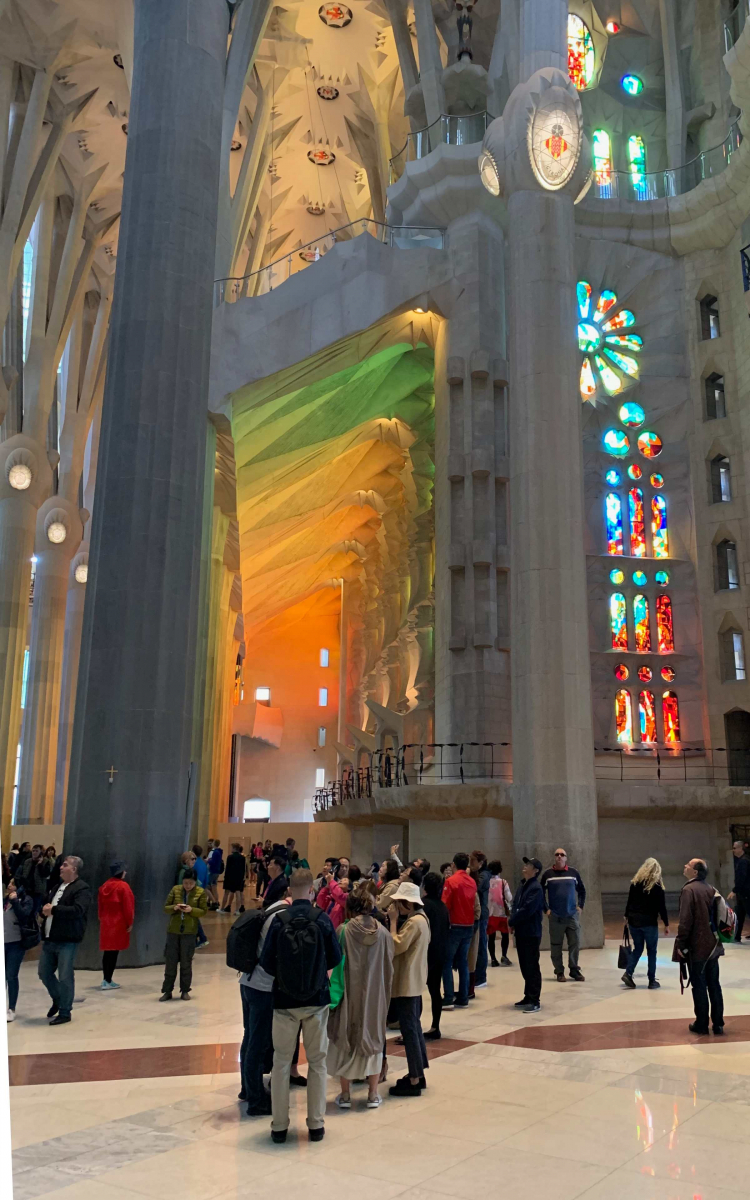
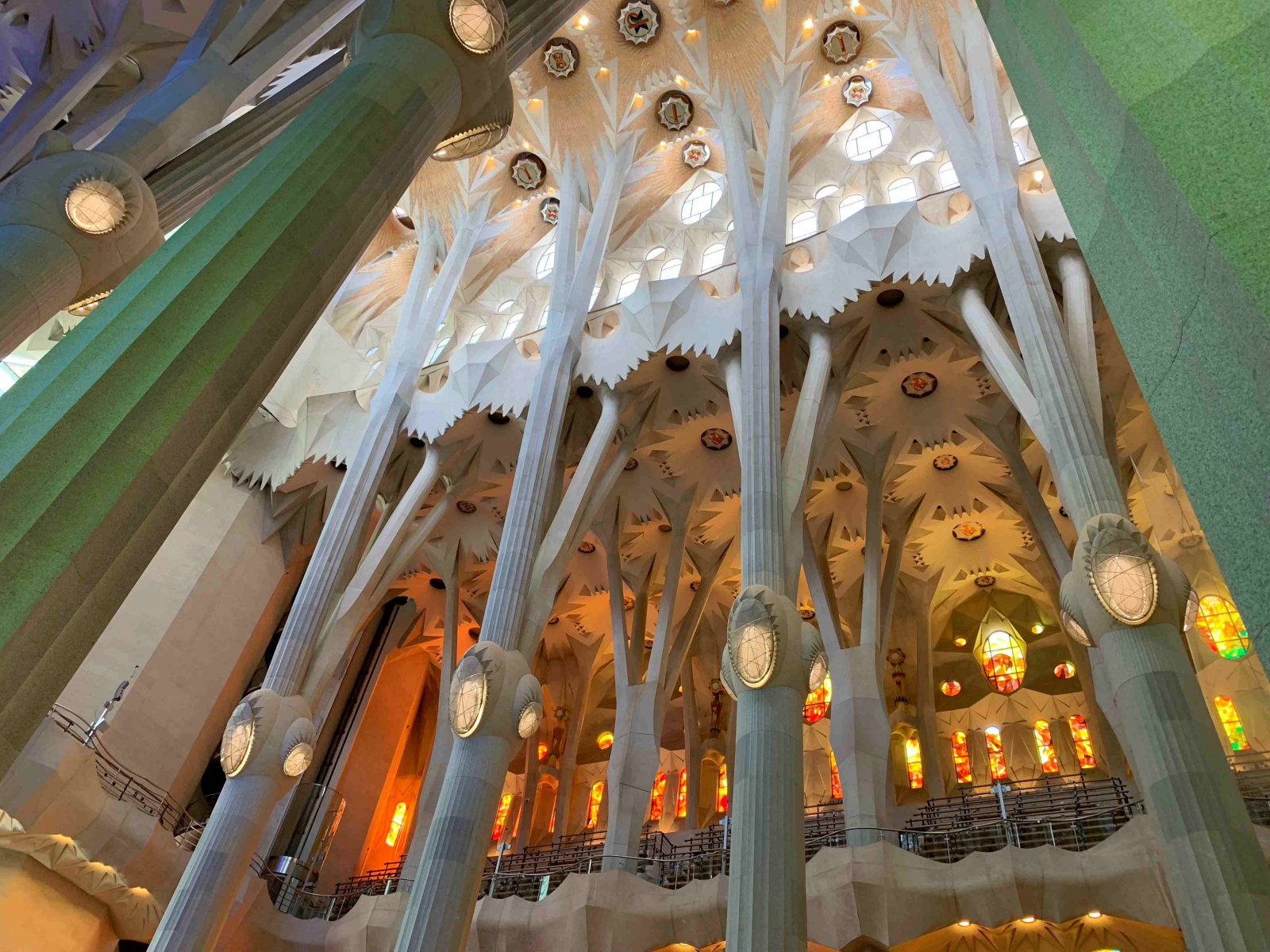
Inside the church the nature theme is taken to new heights – literally. The columns that support the towering spires branch out like trees as they rise to the ceiling. Flowers adorn the ceiling. The stained glass in the east windows transition from blue to green to represent the morning light. While on the west wall the stained glass originally casts a bright yellow light that transitions in to the softer oranges and reds of sunset. Every element of La Sagrada Familia has been considered and reconsidered to reflect Gaudi’s natural sensibilities and to symbolize his devout Catholic faith.

Sagrada Familia Panorama – starting in the east, moving to the west, and ending at the altar
In 2015, Pope Francis referred to Gaudi and “God’s Architect” giving hope to supporters of Gaudi’s sainthood that canonization would be fast-tracked. I assume that one of Gaudi’s miracles (it takes 3 to be granted sainthood) is that they have managed to build this church with private donations rather than funds from the Catholic Church.
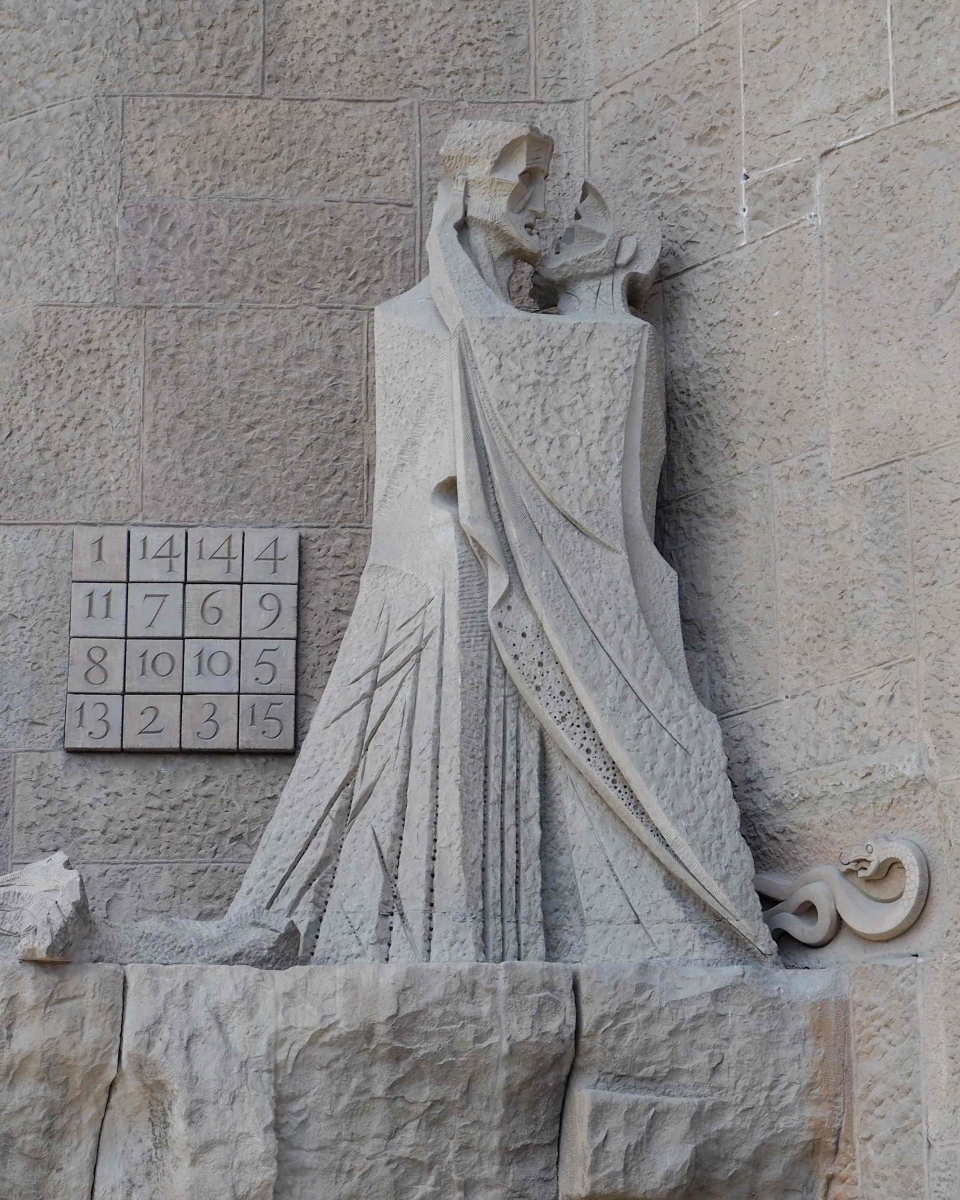
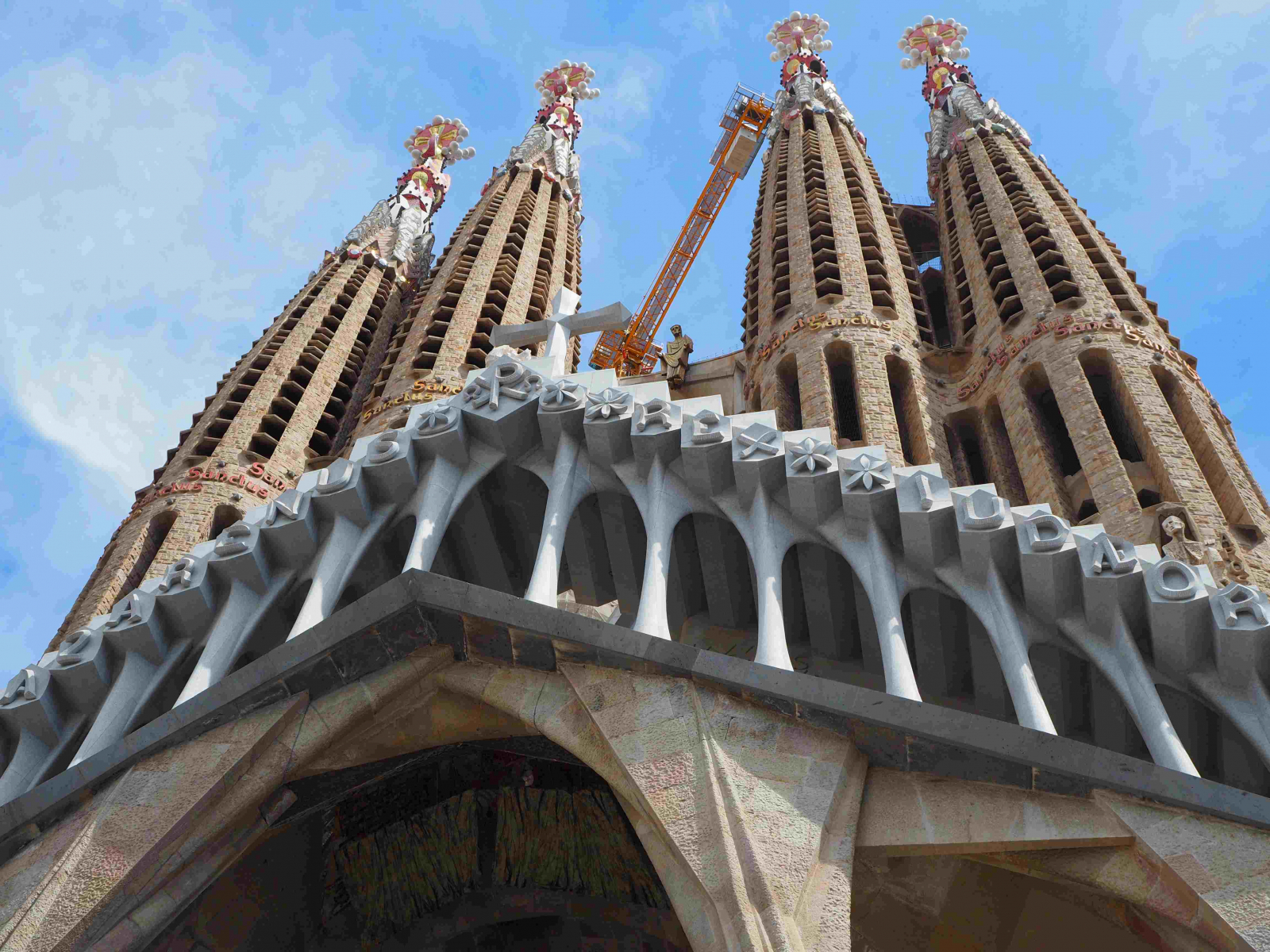
Each row, column and diagonal of the numeric matrix adjacent to Judas’ betrayal of Christ sums to 33. The generally accepted age of Christ at the time of his death.
Zoom in to the top of the towers in the photo with the construction cranes. You will see drop-protection scaffolding. I assume that this keeps construction workers from accidentally falling to the ground while also protecting completed work from damage from falling tools. I suspect that dropping into the safety net would be enough to stop my heart. I wouldn’t need to hit the ground.
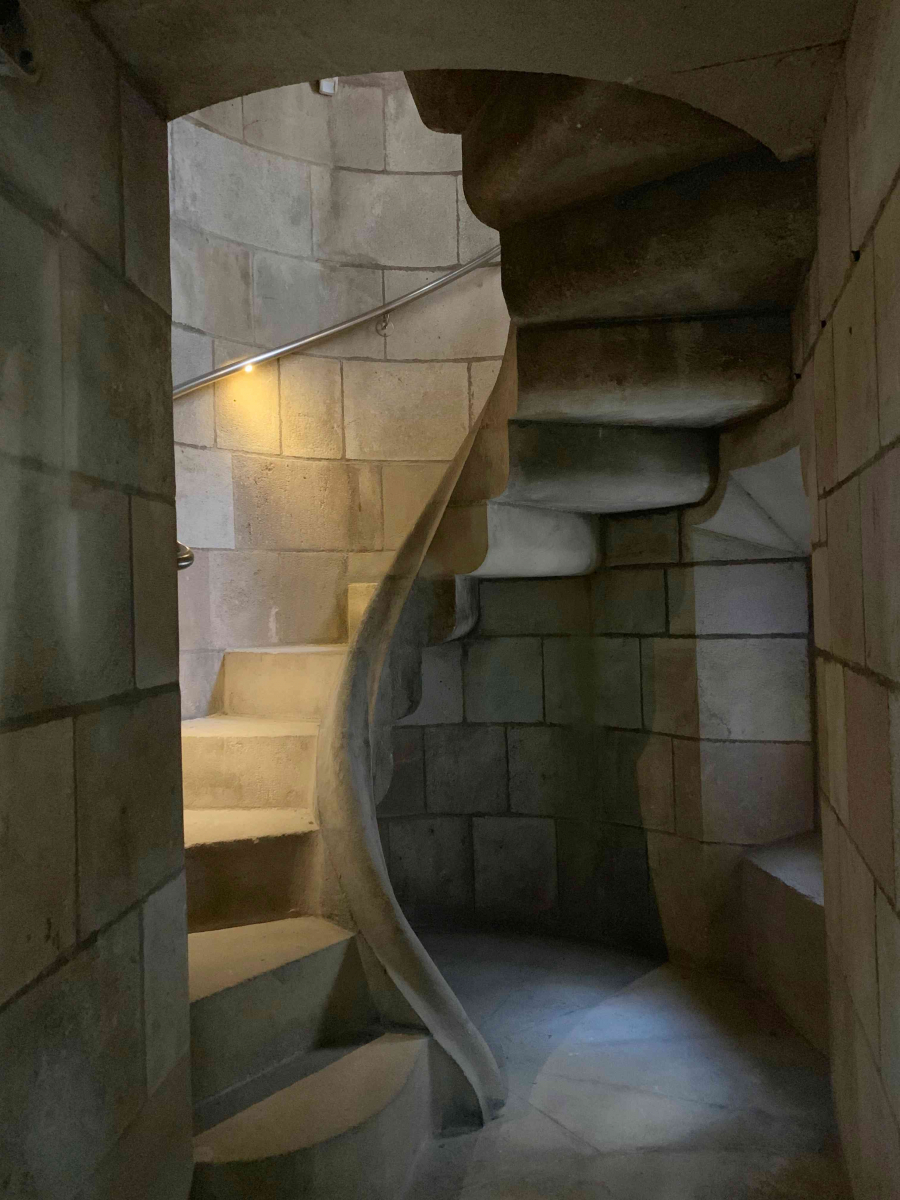
Dan Brown, of The Da Vinci Code fame, recently released his latest thriller, Origin. Much of the novel takes place in Barcelona. In fact, much of the novel takes place in La Sagrada Familia. There is a scene in the novel where he describes a life and death struggle between the good guys and the bad guys that takes place on a narrow, steep, spiral staircase in La Sagrada Familia. The staircase is shown in the gallery above. It was NOT open to visitors.

While we waited for Montserrat to collect our tickets, we guessed at the meaning of the iconography of the Nativity façade.
Inside the church, over the altar, is a crucifix the looks like it is descending from a parachute ringed by small Chinese lanterns. I asked Montserrat about the meaning. She shrugged her shoulders and said, “It’s a crucifix.” No further explanation was offered. So when La Sagrada Familia is completed in 2026 (the 100th anniversary of Ant0ni Gaudi’s death) I will have to return to Barcelona and ask again. Maybe by then someone will have discovered the answer to my question among Gaudi’s notes.

The tree towers of Sagrada Familia

Looking for answers